
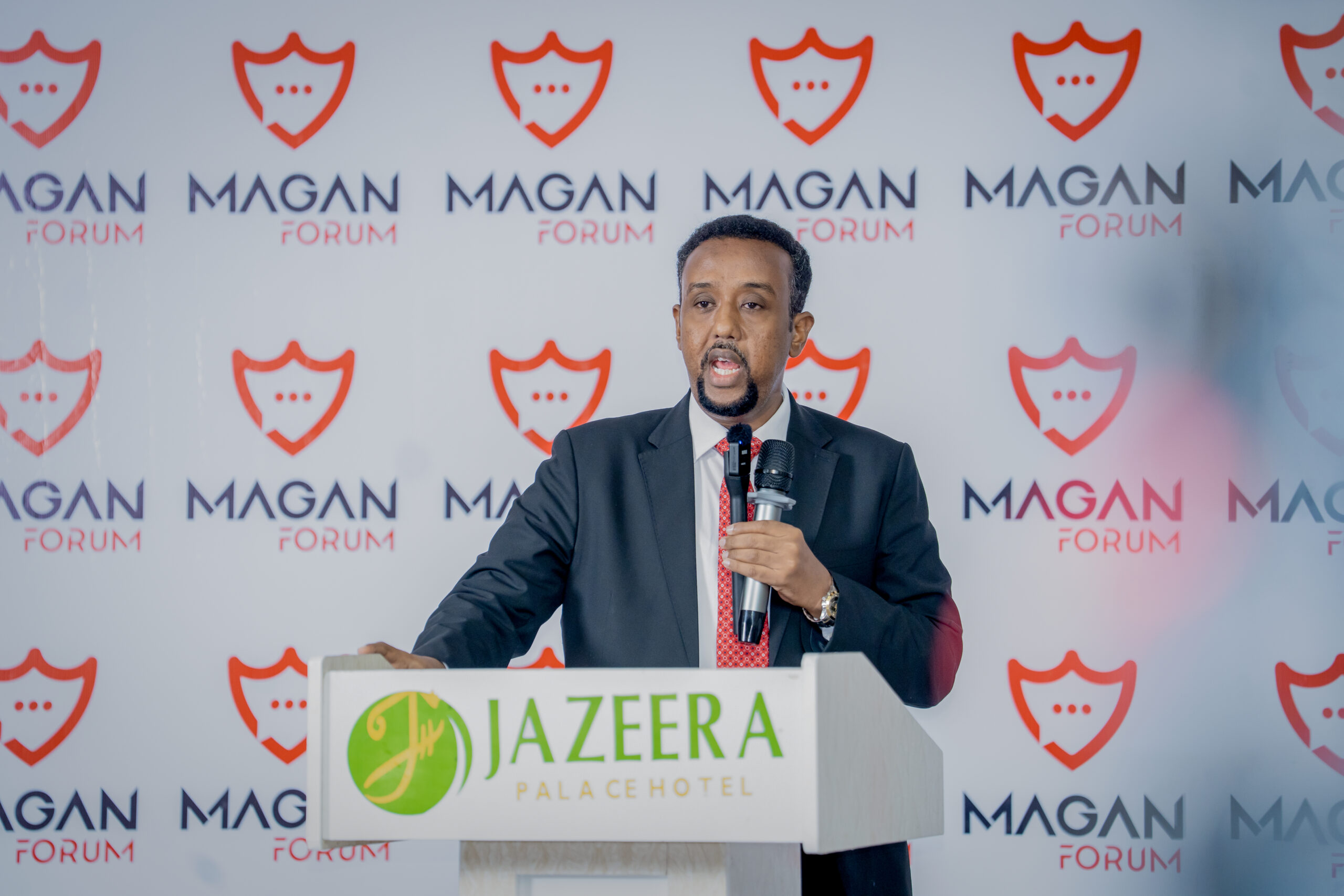
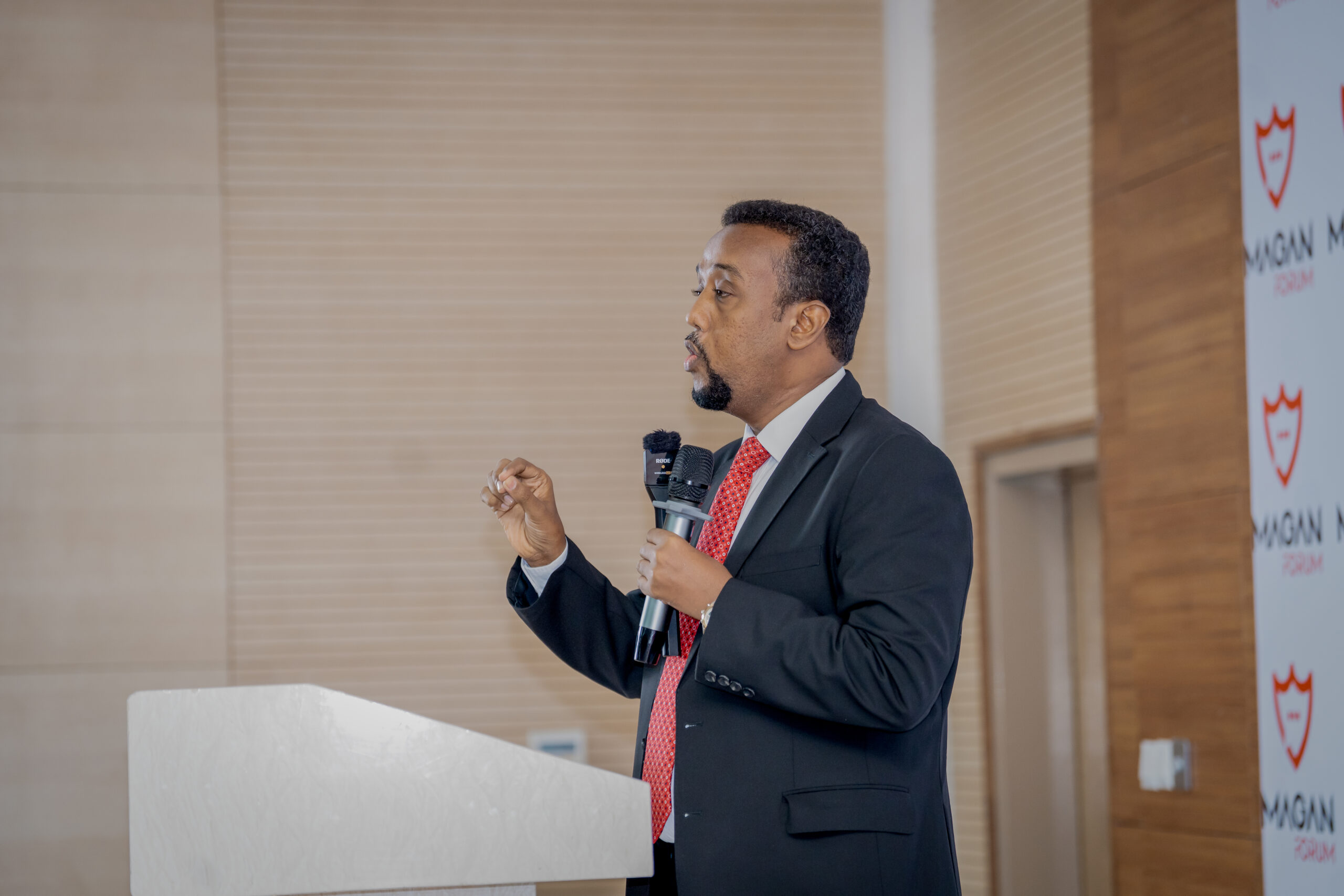
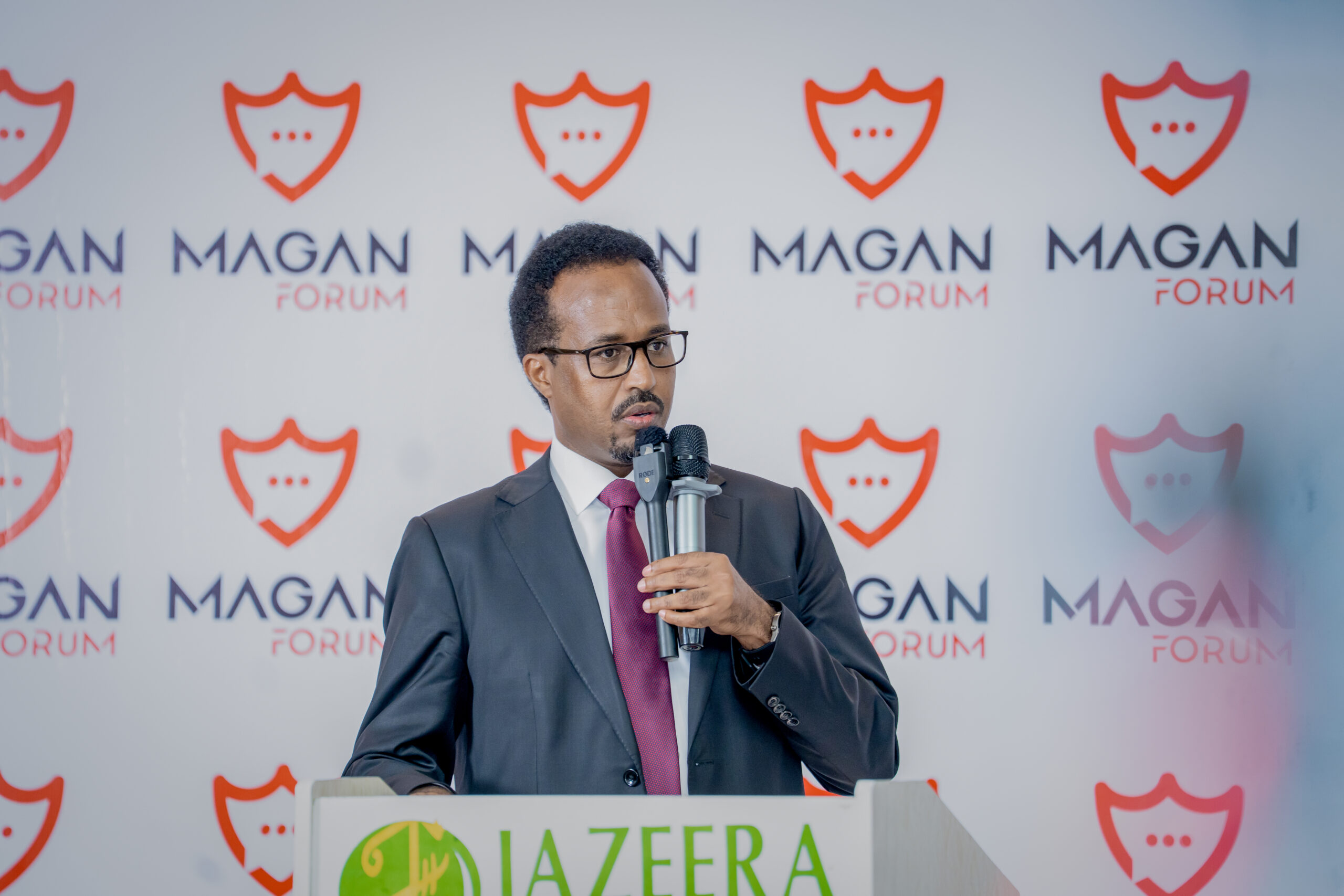
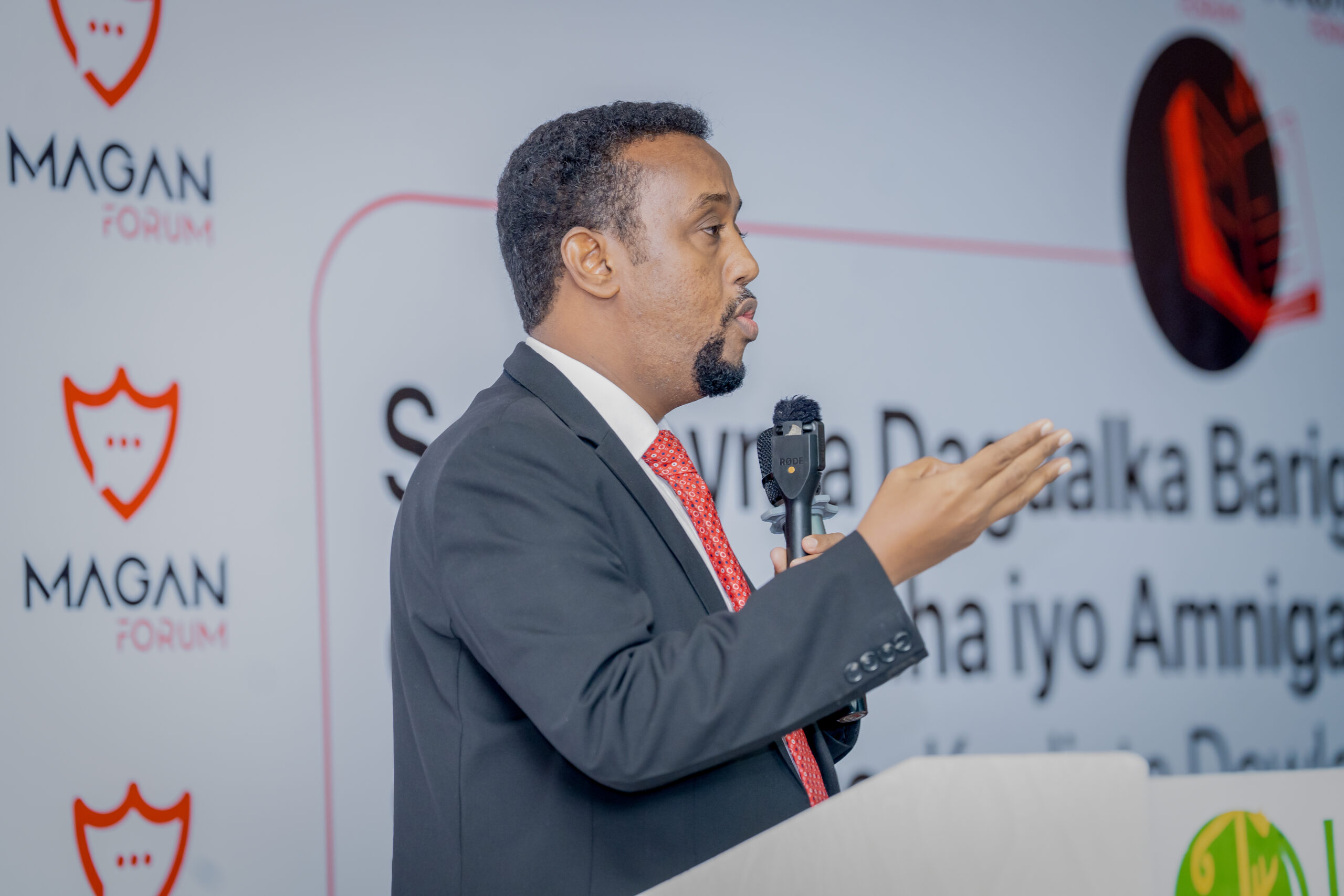
The 2026 One-Day Policy Dialogue brought together policymakers, private sector leaders, development partners, researchers, and other key stakeholders to examine the economic and food security implications of the ongoing Middle East conflict on Somalia. The dialogue provided a platform to exchange insights, identify emerging challenges, and explore practical policy options to strengthen economic resilience, safeguard food security, and enhance collaboration between the Government and the private sector in responding to external shocks.
Agenda
The agenda comprised discussions on the impact of the Middle East conflict on Somalia’s economy and food security, the Government’s policy responses, the role of the private sector in mitigating economic and food security challenges, and recommendations for strengthening coordination and resilience against external shocks
| Time | Speaker | Session |
| 07:00–07:30pm | All participants | Arrival and registration |
| 07:30–07:32pm | Quran | Opining remarks |
| 07:32–07:36pm | Magan forum CEO) Ahmed Ainab, | Welcoming Remarks |
| 07:36–07:40pm | Magan forum bord chair Mohamed Adow | Opening and welcoming Remarks |
| 07:40–07:50pm | Chairperson of the Somali Bankers Association (SBA) Dr. Ahmed Khadar Abdi Jama, | Presentation on: The Impact of the Middle East Conflict on Somalia’s Economy and Food Security |
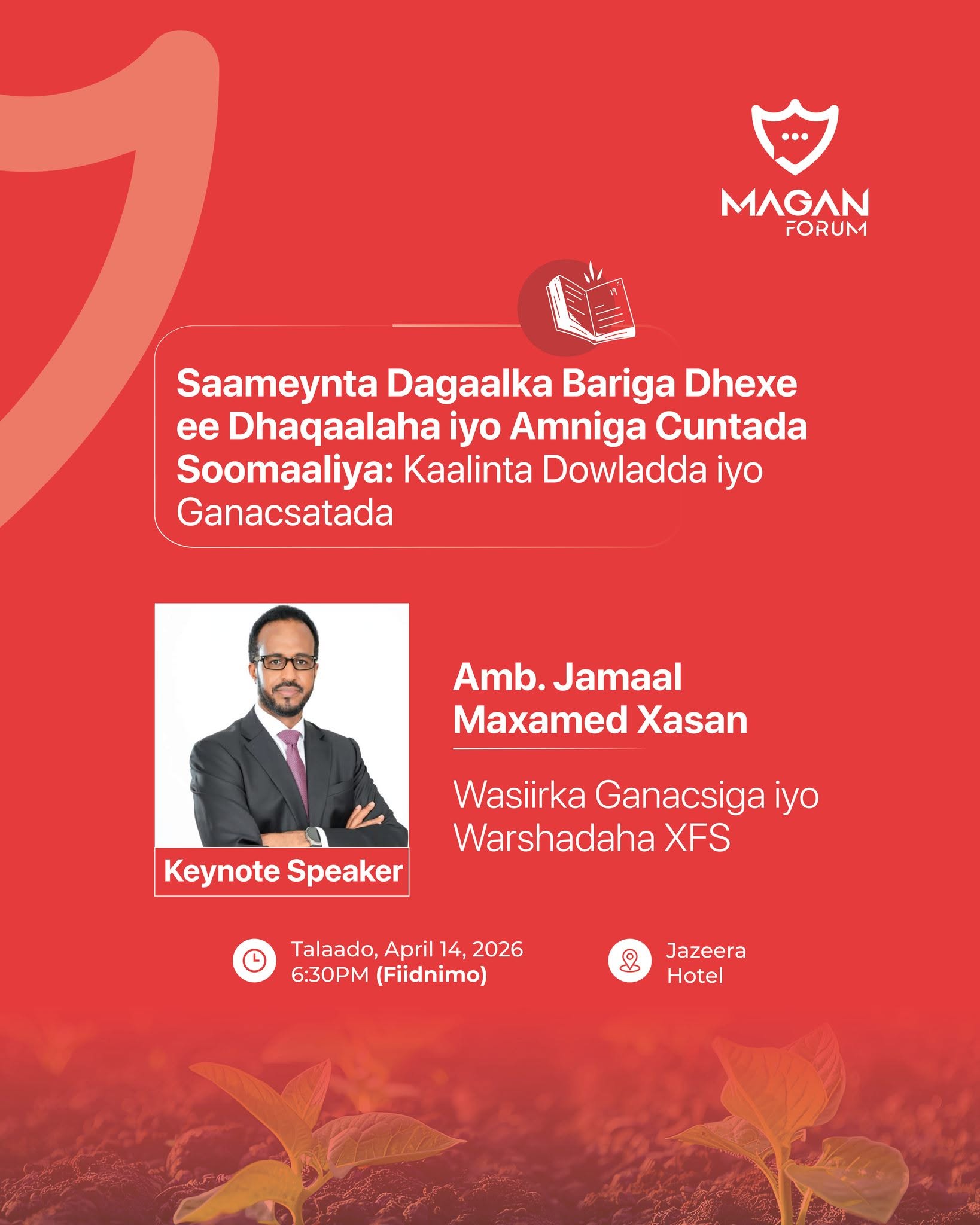
| 07:50– 08:00pm | Minister of Commerce and Industry, FGS Jamal Mohamed Hassan | Guist of honor |
| 08:00–09:40pm | Pannel Chair Iman Jama | Panel discussion on: The Impact of the Middle East Conflict on Somalia’s Economy and Food Security: The Role of Government and the Private Sector. |
| 09:40–09:45pm | Close | End |
Speakers
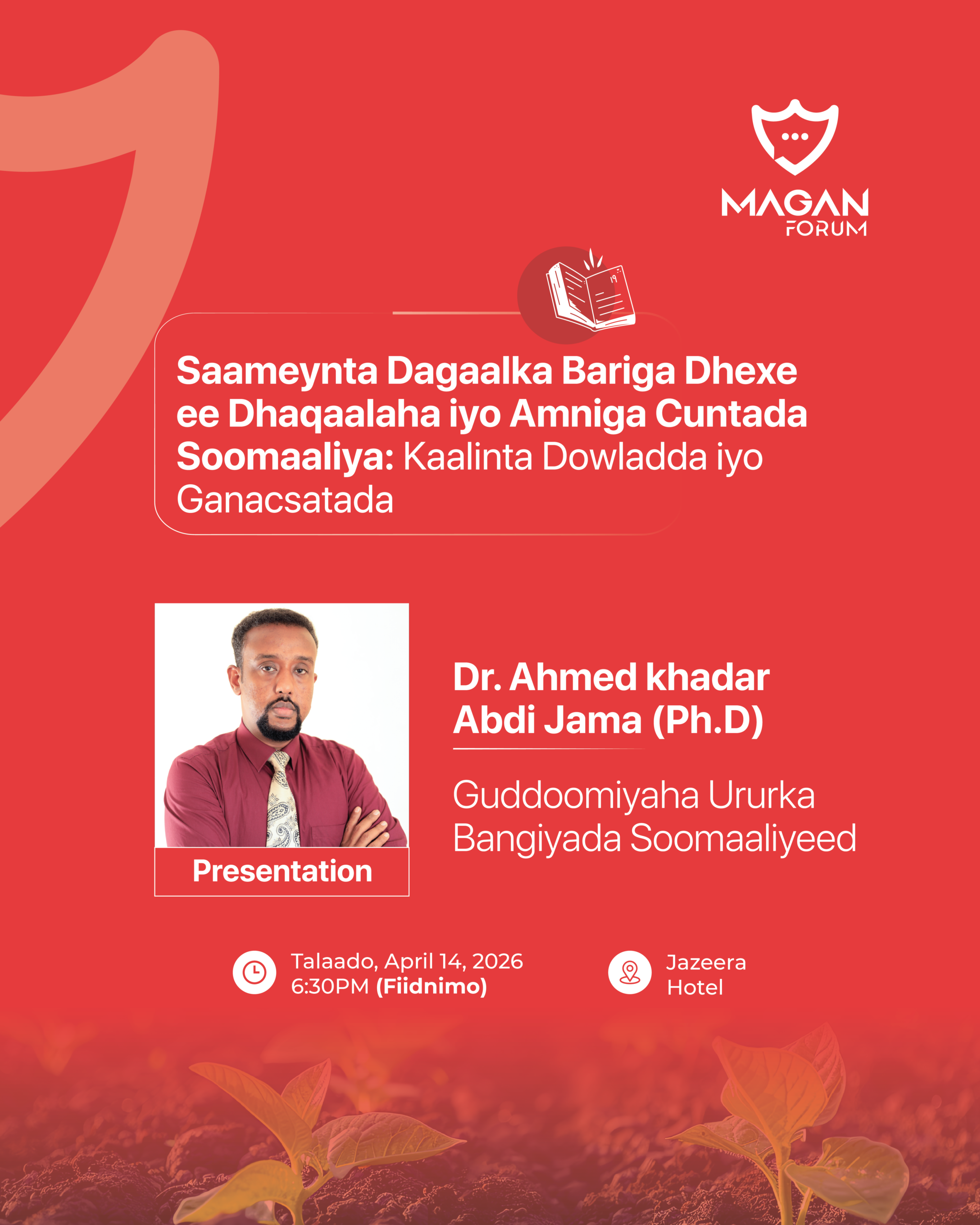
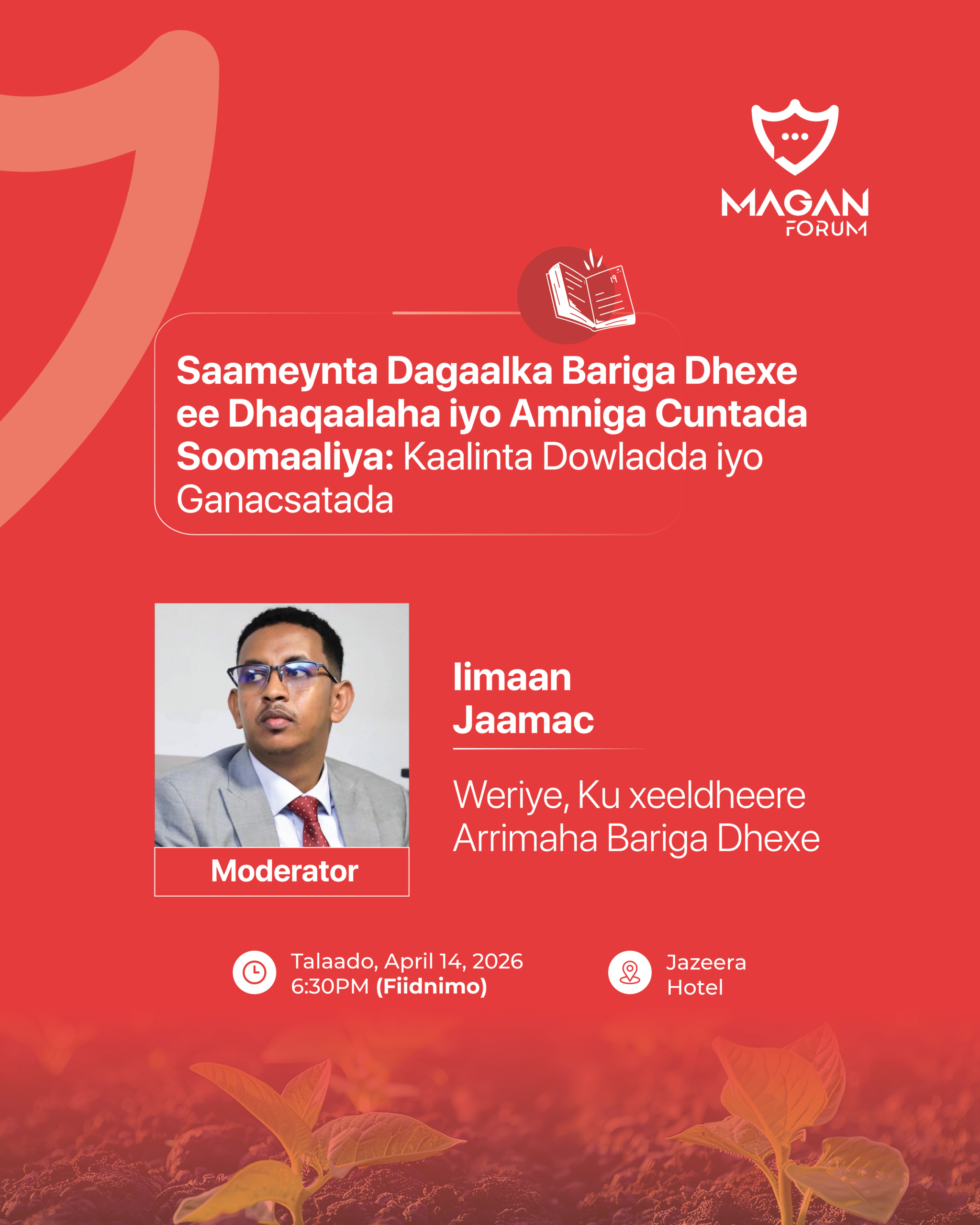
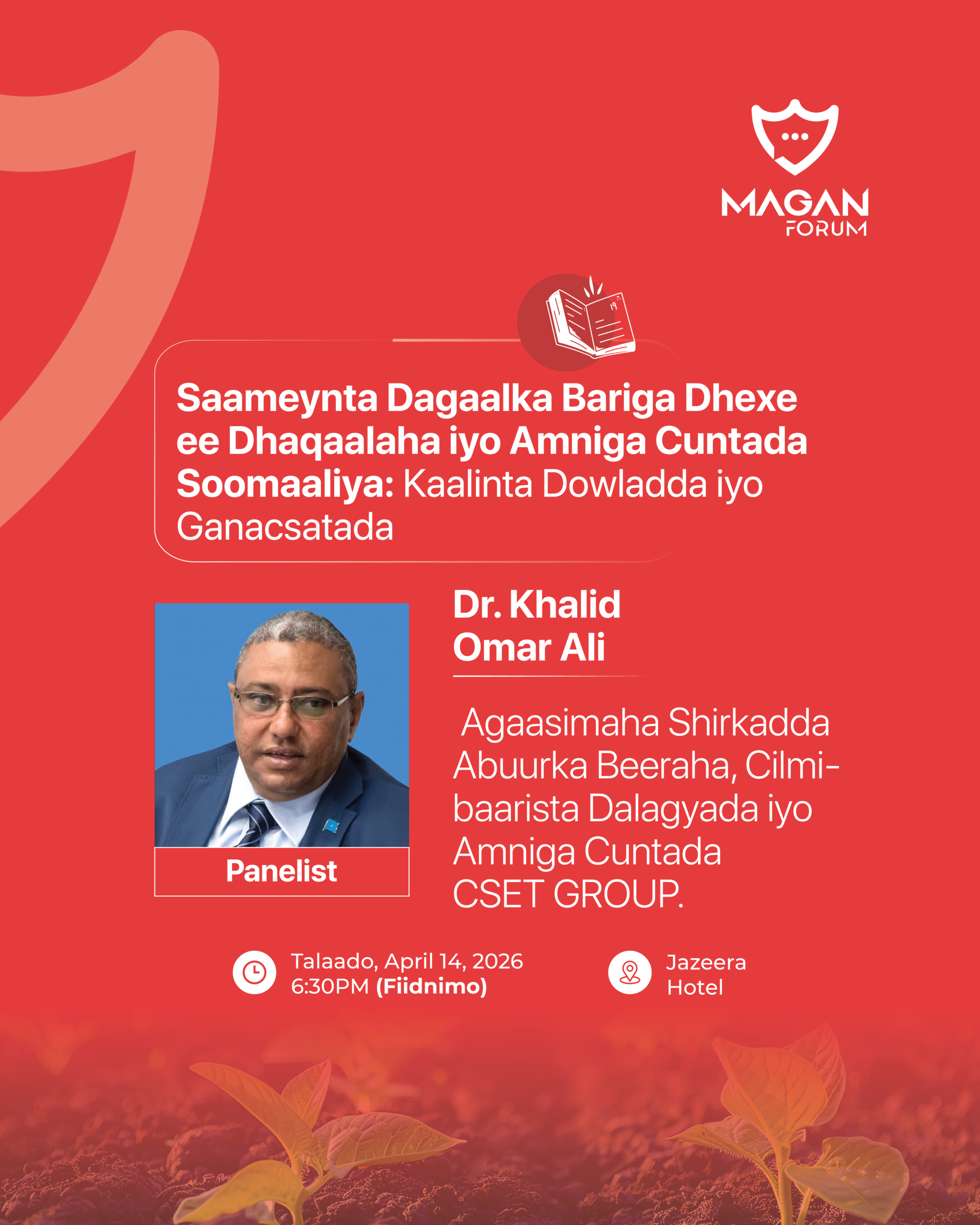
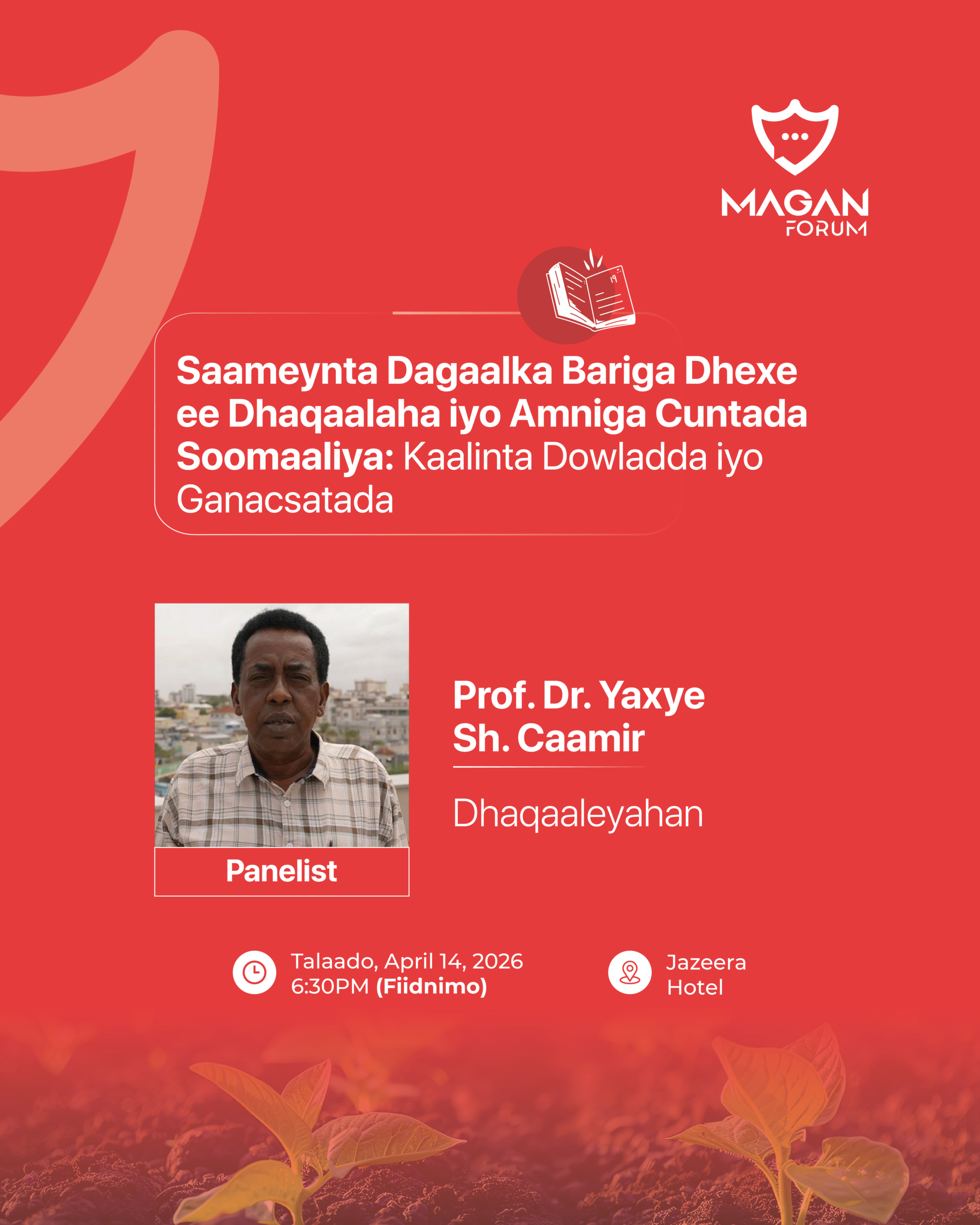

Gallery





Report
Introduction
This policy paper examines how the ongoing Middle East conflict is affecting Somalia’s economy and food security, with particular attention to disruptions in trade, supply chains, and the availability of essential commodities. It highlights the country’s heavy dependence on imports and explores the critical roles of the government and the private sector in strengthening economic resilience, promoting domestic production, and safeguarding national food security. The report also presents practical policy recommendations aimed at reducing vulnerability to external shocks and building a more sustainable and self-reliant economy.